I am writing this for a friend. He is disabled. He wants exactly what most people in this town want: a proper job, a home of his own, and to lean on the state as little as he possibly can. He could make a start tomorrow. At every turn, the system that is meant to help him pushes him back.
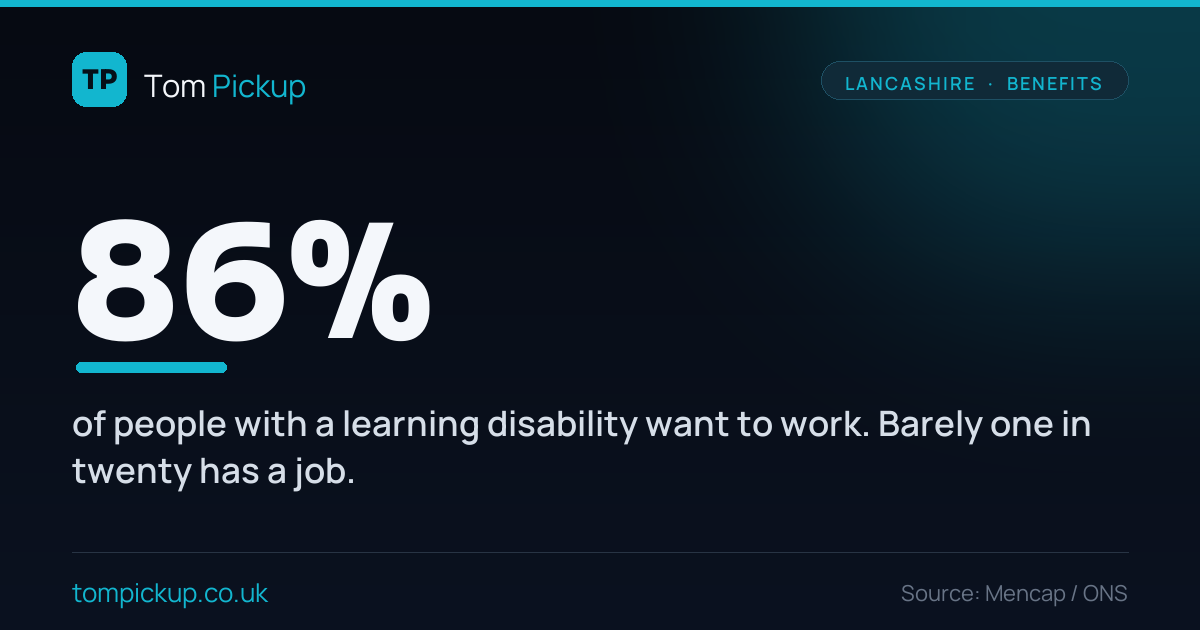
That is the part the welfare debate keeps getting backwards. The bill is not high because disabled people will not work. Look at who the system writes off: among people with a learning disability, 86% want to work, and barely one in twenty has a job. The want is there. What is missing is a system that lets them act on it, and almost every rule in the way was written in Westminster and left for the rest of us to live with. This is not a story about scroungers. It is a story about a state that takes people who want to stand on their own feet and quietly trains them to depend on it.
Wall one: save anything, lose everything
If you rely on means-tested support like Universal Credit, you are allowed savings of up to £16,000. One pound more and your support stops dead. As the Resolution Foundation put it, a family entitled to help still gets some of it at £16,000, “but would receive nothing if they saved just one penny more.”
That limit has been frozen since 2006. Had it risen with prices it would be around £27,000 today. So a disabled person who wants to save for a deposit, a car to get to work, or simply a cushion to move out of their parents’ home, is told: build a future and we take your support away. It punishes exactly the independence everyone says they want. (Personal Independence Payment itself is not means-tested, which is right. It is the support around it that springs the trap.)
Wall two: work, and risk your award
Even getting a few hours of work has felt like a gamble, because it could trigger a reassessment that strips your benefit. Half of disabled claimants told the DWP they feared losing their benefits if they tried work and it did not last.
To its credit the government has finally acted: the “Right to Try Guarantee,” in force from spring 2026, means simply trying work will no longer automatically trigger a reassessment. That is welcome, and it is also an admission. You do not legislate to remove a fear unless the fear was real and was keeping people out of work. The job is only half done, because it does not touch reassessments already in the diary, or the separate review of a care package.
Wall three: the help to work that never comes
Say you clear those hurdles and line up a job. You may need Access to Work, the scheme that funds the equipment, software or support a disabled person needs to do the role. It is a good scheme. It is also broken.
66,749 people were waiting for an Access to Work decision in February 2026, triple the figure of three years earlier. A waged employee now waits around 38 weeks; a self-employed person far longer. The DWP admits it will take at least 18 months to clear the queue, and a committee of MPs found the backlog is “creating hardship and uncertainty.” No employer holds a job open for nine months. The offer lapses, and the disabled applicant goes back to the start.
Wall four: you cannot even get there
This is the one I see most sharply in Lancashire, and it is the link people miss.
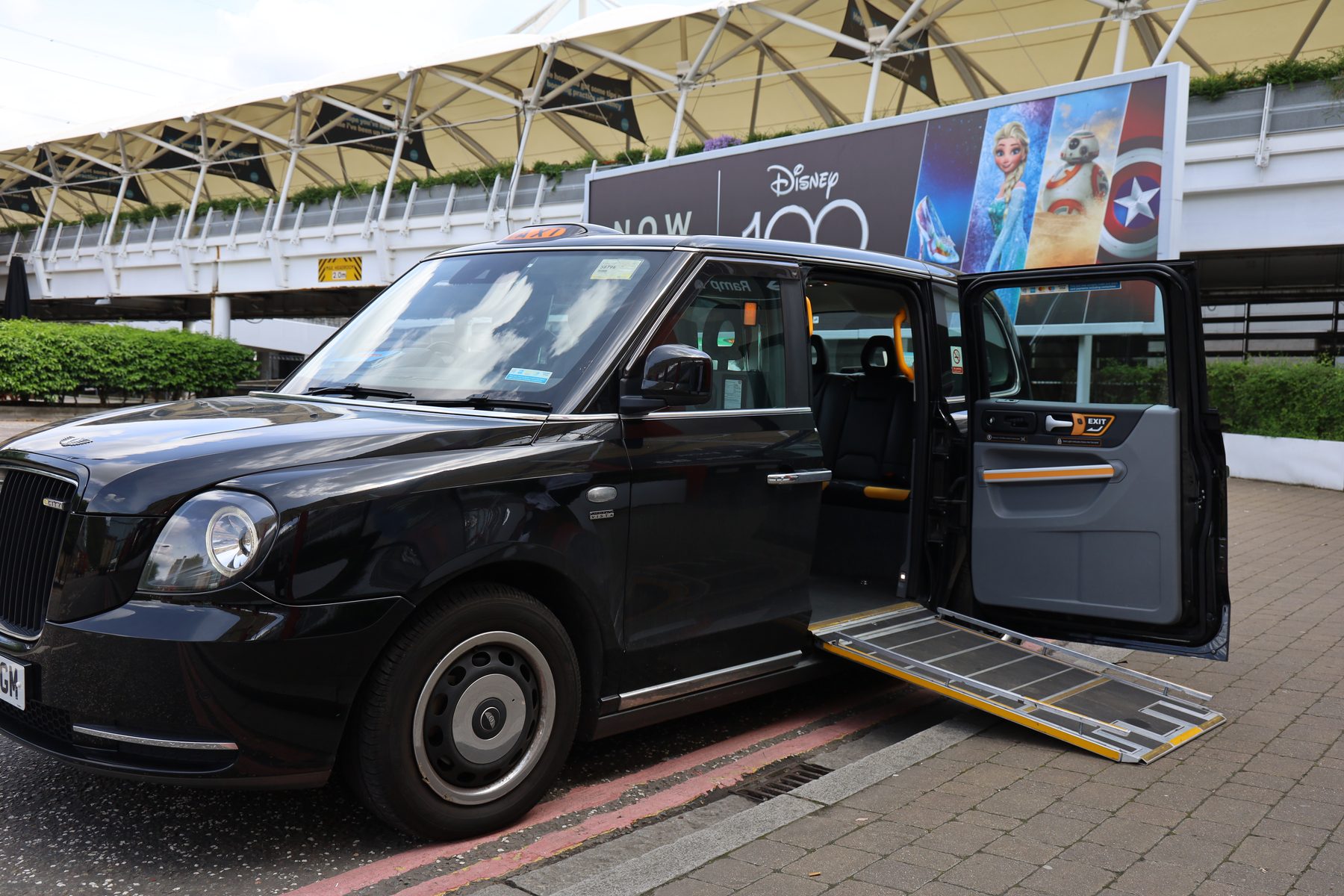
To do most jobs you have to physically get to them, and a disabled person who needs a wheelchair-accessible vehicle has very few to choose from. Outside London, only 39% of taxis can take a wheelchair, against 100% in the capital, and the share is falling. Now add the timing. Local councils, including ours, have a legal duty to get disabled children to school, and that duty soaks up the accessible-vehicle fleet at exactly the wrong moment: the accessible minibuses and taxis are booked solid between roughly 7:30 and 9:30 in the morning and 2:30 and 4:30 in the afternoon for the school run. Those are commuting hours.
So a disabled adult who has beaten the savings trap, the reassessment fear and the Access to Work queue can still be stopped at the front door, because there is no accessible vehicle free to take them to work. Worse, the low-margin contracts councils are forced to offer for school transport are driving accessible-vehicle operators out of the wider market altogether. The state has, without meaning to, cornered the supply.
Let me be clear about school transport itself. Getting disabled children safely to school is a lifeline and it must be protected. The point is not that we do too much for those children. It is that an inherited, statutory system costs a fortune (the national SEND transport bill is heading toward £2 billion, far more per child than mainstream) and has the perverse side-effect of stranding disabled adults who want to work. A better-designed system would serve the children and free up vehicles the rest of the day.
The sum of the parts
Take any one of these rules and you can defend it. Savings limits stop abuse. Reassessments check need. Access to Work has to be funded. School transport keeps children safe. But stand them next to each other and look at what they do to one disabled person who simply wants a job and a life of their own.
Save, and lose support. Work, and risk your award. Get the support, after the job has gone. Find the job, but no way to reach it. At every turn, the safe option is to stay exactly where you are, on benefits. That is not a lifestyle choice. It is a maze built by people who never had to walk through it.
What I want done
- Unfreeze the savings limit. A cap set in 2006 punishes saving and independence in 2026. Lift it, and stop telling disabled people that a future costs them their support.
- Clear the Access to Work backlog and make it a right. A scheme that takes 38 weeks and is “not an entitlement” cannot be the thing standing between a disabled person and a job. Fund it, staff it, and guarantee it.
- Finish the Right to Try job. Protect people from work-triggered and care-package reassessments, so trying work is genuinely risk-free.
- Fix the accessible-vehicle squeeze locally. This one is partly ours to act on. Grow the wheelchair-accessible fleet, design school-transport contracts so vehicles are free outside the school run, and expand independent travel training so young people learn to travel on their own. That is better for disabled children, for taxpayers, and for disabled adults trying to get to work.
I am the Cabinet Member for Adult Social Care, so I see where this ends: people who could be working and independent, kept dependent by a system that was supposed to help them. Most of these rules were made in Westminster and we inherited them. But “we inherited it” is not a reason to leave it. It is the reason to say, plainly, that it is broken, and to start pulling it apart.
My friend does not want sympathy, and he does not want a handout. He wants a job, a home of his own, and to be left to get on with his life like anyone else. The least his country can do is stop standing in his way.
Where these numbers come from
You do not need this part to follow the story. It is here so the working can be checked.
- “Want to work” figures: DWP’s survey of health and disability benefit claimants (37% held back by fear of losing benefits; 50% fear losing them if work fails). Learning-disability employment (86% want work, 5% have it) is from Mencap, citing ONS. The disability employment gap is from the House of Commons Library.
- The £16,000 savings limit and the “one penny more” example are from gov.uk (Universal Credit capital rules) and the Resolution Foundation’s 2025 analysis, which confirms the limit has been frozen since 2006. PIP, DLA and contributory ESA are not means-tested.
- The Right to Try Guarantee is government legislation in force from spring 2026.
- Access to Work: 66,749 awaiting a decision (DWP, February 2026), waiting times and the 18-month clearance estimate from the National Audit Office and the Public Accounts Committee (2026).
- Accessible vehicles: the proportion of wheelchair-accessible taxis (39% outside London, 13% of all licensed vehicles) is from Department for Transport data via Leonard Cheshire. The peak-time “booked for the school run” point reflects how council home-to-school transport, a statutory duty under the Education Act 1996, contracts the accessible-vehicle fleet during morning and afternoon peaks; the national SEND transport cost figures are from the National Audit Office and the Local Government Association.
Two honest notes. The accessible-vehicle figures are national; the Lancashire consequence I describe is the on-the-ground effect of those national facts, not a separate local statistic. And these rules are mostly set nationally: the point of the article is that they should change, not that any one body locally is at fault.