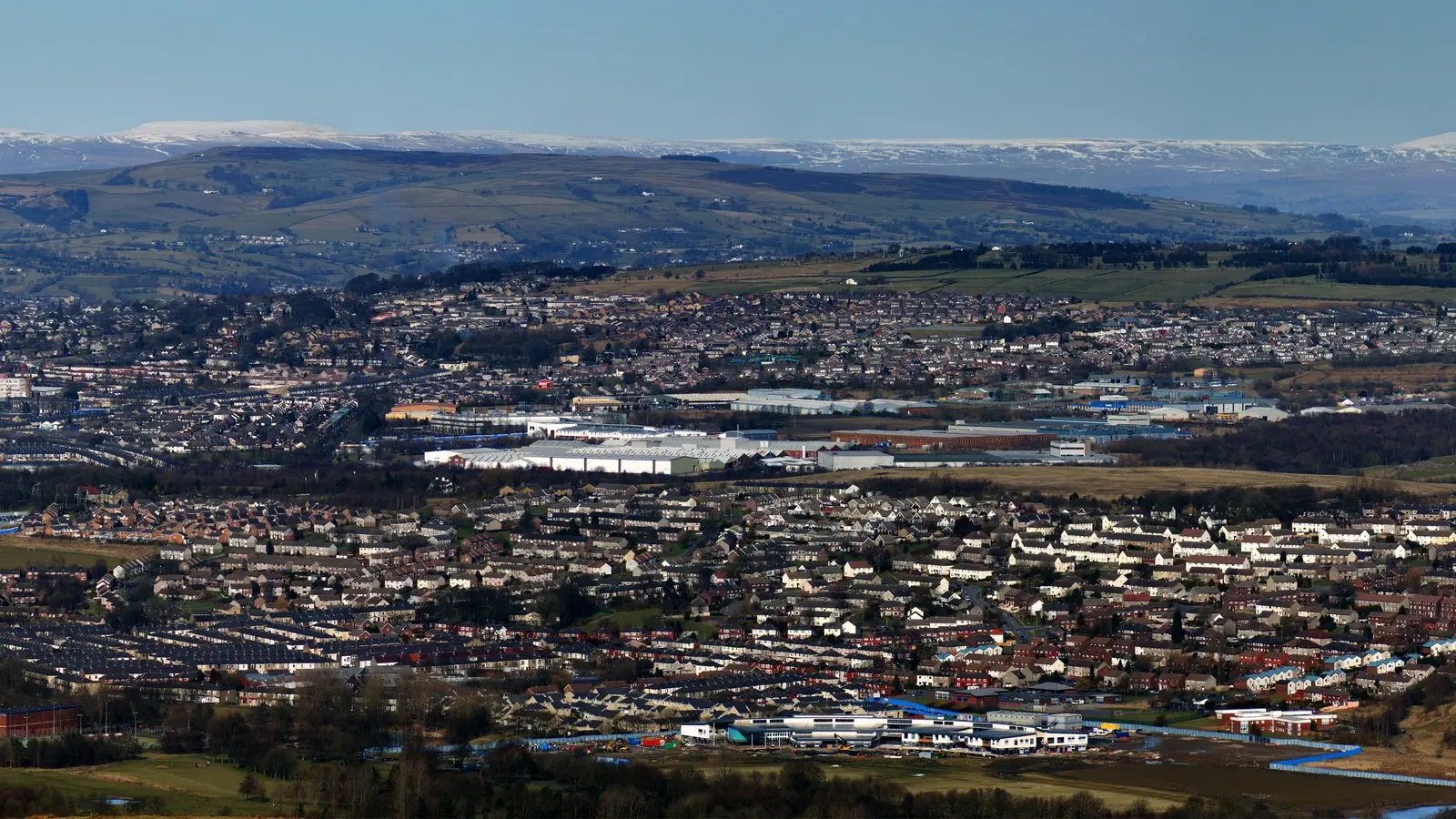
Every year Burnley Borough Council spends tens of millions of pounds of public money, and every year it publishes where most of it went. The catch is the form. The data comes out as four raw spreadsheets a year, buried on a page almost nobody visits, in a layout you cannot search, sort or add up without knowing your way around it. Technically it is published. In practice it is invisible.
So I took all four quarters of the council’s official 2025/26 spending data, every single payment of £500 or more, and built a tool to make sense of it. This article is the story those numbers tell: £38.06 million across 4,489 payments to 843 different suppliers. If you would rather skip the analysis and dig through the raw record yourself, every payment is searchable on AI DOGE. Everything, here and there, comes straight from the council’s own published files, and the working is set out at the bottom so it can be checked to the penny.
What this is, and what it is not
Be clear about what you are looking at, because honesty about scope is the whole point.
This is every payment of £500 or more that Burnley Borough Council made to suppliers and third parties in 2025/26. It is the data the law requires every council in England to publish under the transparency code. It is a large and important slice of what the council does with your money, but it is not the council’s entire budget. It does not include staff wages and pensions, the housing benefit the council pays out and largely reclaims from government, or the thousands of payments under £500 that fall below the publishing threshold. So when you read “£38.06 million”, read it precisely: that is the total of the council’s published over-£500 payments, not its total spending.
To put the £38 million in proportion: the council budgeted to spend about £64 million running its day-to-day (revenue) services in 2025/26, and it runs a separate capital programme for building and investment on top of that. The £38 million here is the part of both that left the council as payments of £500 or more to outside suppliers, and it splits almost exactly into £20.7 million of revenue spending and £17.3 million of capital. It looks far bigger than the council’s net budget of around £19 million, but that net figure is only what remains after fees, rents and government grants are set against the gross, and it includes staff wages, which never appear in supplier data at all. The clearest illustration is housing benefit: the council’s housing budget is nearly £24 million gross but only about £1.7 million net, because almost all of it is paid out and then reclaimed from government. The borough’s own share of your council tax, for comparison, is just £344.58 a year on a band D home. This page does not tell you the council is overspending or underspending. It tells you, line by line, where the money it did spend actually went.
Where it went
The cleanest way to see the shape of a year’s spending is by the type of thing the money was spent on. This is the council’s own expenditure classification, totalled across all four quarters.
Two categories tower over the rest, and together they are nearly £22.4 million, almost three pounds in every five. The first is building work: the capital programme that puts up and does up physical things. The second is agency and contracted services: the money paid to the outside companies that run services the council no longer runs itself, above all waste collection and the back office. Hold on to that second one, because it is the real story of how a modern district council spends.
Capital, revenue, and the rhythm of the year
The £38 million splits almost evenly between two very different kinds of money. Revenue spending, £20.7 million, is the day-to-day cost of running services. Capital spending, £17.3 million, is investment in buildings, vehicles and land. A district the size of Burnley putting nearly half its over-£500 spending into capital is notable, and it reflects a year heavy with regeneration and end-of-contract fleet replacement.
The biggest suppliers
Of the 843 suppliers paid, a handful take a very large share. These are the ten biggest in 2025/26.
Three of those ten names are the same operation. FCC Environment, FCC Recycling and FCC Waste Management together took £6.3 million, which makes the company that empties Burnley’s bins and cleans its streets the council’s single biggest supplier relationship by a distance. That work has been contracted out since 1995; the firm that held it as Urbaser was bought by FCC, and the contract ran to the end of March 2026, which is why the year’s two largest single payments, £785,397 and £420,036, are capital fleet payments to FCC Recycling in the final month. A new eight-year waste contract is being let to start in April 2026, so this is precisely the moment that £6 million-a-year relationship should be under the closest scrutiny.
The second giant is Liberata UK, at £3.06 million, the outsourcing company that has run the council’s revenues and benefits, customer services, IT, payroll and HR since 2016 under a “strategic partnership”. That deal is currently due to run to the end of 2027, with an extension to 2030 on the table. Between waste and Liberata, £9.4 million a year of Burnley’s published spending goes to just two outside contractors. Whether that outsourced model still delivers value is one of the most important questions the council faces, and you cannot ask it without first seeing the numbers.
The rest of the top ten is a mix of running costs and building work. Burnley Leisure takes a £302,499.75 management fee every quarter, £1.21 million a year, to run the town’s leisure centres, and Calico and EDF Energy are also paid from the revenue budget. The capital programme accounts for the others: Barnfield Investment Properties and the building firms behind it are the town-centre regeneration, and Cemplas and Geoffrey Robinson are the bricks-and-mortar work.
Payments worth a second look
Transparency is not only about totals. It is about being able to point at a single line and ask a question. A few from this year:
- £350,000 to the law firm Hill Dickinson on 24 June 2025, booked against the capital programme. A payment that size to a solicitor is almost always the legal completion of a land or property deal rather than legal advice, but it is exactly the kind of line a resident is entitled to have explained.
- £302,499.75 to Burnley Leisure, four times over. The leisure management fee is one of the council’s largest standing commitments, paid like clockwork each quarter, and worth watching as budgets tighten.
- £289,596 to Eon Control Solutions in March, capital spending on building energy systems, the unglamorous end of cutting the council’s own running costs.
None of these is wrong. The point is that until now you could not find any of them without trawling four spreadsheets by hand. Now you can.
Search every payment yourself
The figures above are the headlines. The complete record, every one of the 4,489 payments, lives on AI DOGE: search it by supplier, filter it by month or quarter, and check the year total against the council’s own budget.
All 4,489 payments. Searchable and filterable.
Open Burnley on AI DOGE →What I want done
- Publish spending in a form people can use. I built the table above in an afternoon from the council’s own data. There is no excuse for the council not to offer the same as standard: a searchable record of every payment, updated every month, not four raw spreadsheets a year that only an insider can read.
- Scrutinise the big contracts as they are signed. The eight-year waste contract is being let right now, and the Liberata partnership runs to 2030. Together they were £9.4 million in 2025/26. Deals of that size and length should be examined line by line, in public, before the ink is dry, not waved through.
- Account for the capital programme. Nearly half this spending is building work and investment. Every major project should have a clear, public answer on what it cost and what the town got for it.
- Treat openness as the default. Residents own this money. They should never have to rely on one person with a spreadsheet to find out where it went.
I am a Lancashire county councillor, not a member of Burnley Borough Council, so this is not my budget to set. It is, like yours, my money as a resident of this borough, and the data is public. All I have done is put it where the people who paid for it can finally see it.
Where these numbers come from
You do not need this part to follow the story. It is here so the working can be checked, to the penny.
- Every figure comes from Burnley Borough Council’s own published “spend over £500” data for 2025/26, the data the council is required to publish under the Local Government Transparency Code. I downloaded all four quarterly files directly from the council: Q1, April to June, Q2, July to September, Q3, October to December and Q4, January to March. They sit on the council’s council spending page. Added together they contain 4,489 payments totalling £38,056,787.31, to 843 distinct suppliers, dated 2 April 2025 to 25 March 2026.
- Nothing has been added, removed or reclassified. The total is the exact sum of the “Net Amount” column across the four files. The category, capital/revenue and service labels are the council’s own. The only tidying is cosmetic: the council tags some supplier names “ - NET” or “ - GROSS” to show whether a figure is shown before or after VAT, and I strip that tag when grouping a supplier’s payments together. It does not change a single number.
- This is over-£500 payments, not the council’s whole budget. It excludes wages and pensions, housing benefit paid out and largely reclaimed, and all payments under £500. So treat £38.06 million as the published over-£500 total, not total council expenditure. For scale, the council’s 2025/26 gross revenue budget is £64.1 million and its total net expenditure £18.7 million (Burnley Borough Council, 2025/26 Council Tax Statutory Financial Information), with the capital programme funded separately. The £38.06 million here splits into £20,721,932 revenue and £17,323,405 capital (plus three treasury payments totalling £11,450).
- The other two published files are kept separate, on purpose. Burnley also publishes purchase-card transactions (£155,820 across 1,734 small card payments in 2025/26) and a list of contracts and purchase orders over £5,000 (£33.1 million of orders raised). The contracts file records commitments, not payments, and many of those orders are paid through the spend file above, so adding the two together would double-count. I have not done that. The £38.06 million figure is payments only.
- An independent check. I cross-checked the first three quarters of my totals against the separately-built AI DOGE council spending dataset, which processes the same source by a completely different pipeline. The two agree to the penny (£27,917,686.85 for April to December), which is the strongest confirmation that the figures here are read faithfully from the source.
One honest note. The council changed some of its internal service codes part-way through the year, so a few service names appear in both an old and a new form in the table. That is the council’s own labelling, left exactly as published. The totals, suppliers and categories are unaffected.
Corrected 28 September 2026. An earlier version described the rest of the top ten suppliers as mostly the capital programme; three of them, Burnley Leisure, Calico and EDF Energy, are revenue spending. The waste and Liberata total is now given as £9.4 million rather than about £9 million. No total, count or supplier figure has changed.