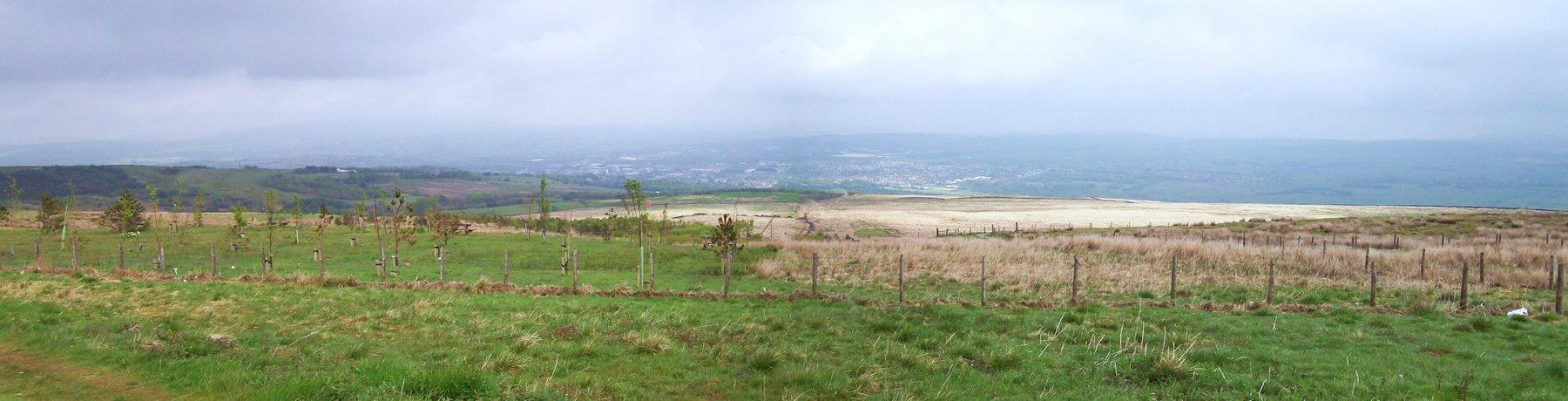
A town can be short of homes and full of empty ones at the same time. Burnley is. While families sit on the housing waiting list and people sleep rough on its streets, hundreds of perfectly good houses stand empty, some for years. In one of the richest countries on earth, that is a disgrace, not a detail. Here are the numbers, and what should be done.
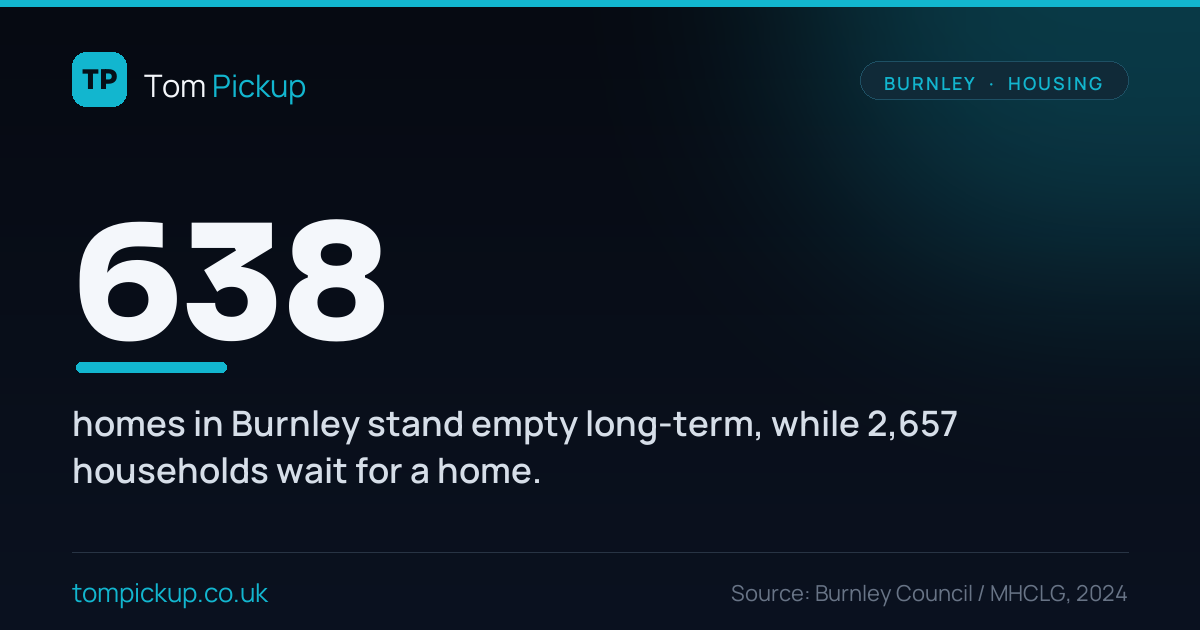
These are not opposites that cancel out. Filling every empty home would not clear the waiting list on its own, and some emptiness is normal, a house between owners, a probate going through. But 638 long-term empty homes is not normal churn. It is housing the town already has, sitting idle, in a place that badly needs it.
Empty on one street, waiting on the next
The contrast is the whole story.
Behind those numbers are real pressures. In the nine months to January 2026 the council took 2,058 homelessness enquiries, a rate of around 2,470 a year. 33 households were living in temporary accommodation on one January snapshot. And rough sleeping, though still small in number, rose from 4 people to 7 in a year, on the autumn 2024 street count, with the council reporting that its emergency beds were full over winter.
The queue for an affordable home has been climbing for years, even as homes sit empty.
Set the long-term empties against the waiting list and it works out at roughly one idle home for every four families waiting. That will not house everyone. But every empty home brought back is one more family housed, one less house rotting on a terrace, and one more lived-in front door on a street that needs them.
Why homes sit empty
Houses do not stay empty for no reason. The common ones are:
- Absent investors. A cheap terrace bought as a punt, then left while the owner waits for the price to rise or simply loses interest. My earlier articles showed how much of Burnley’s cheap stock has been bought up this way.
- Probate and inheritance. A home left when someone dies, stuck while the estate is sorted out, sometimes for years.
- Disrepair. A house that needs more spending than the owner can or will put in, so it just sits.
- Owners who cannot be found or will not act. The hardest cases, where a property quietly falls derelict and drags a street down with it.
Burnley is also a town of small households. Nearly 40% of homes here get the single-person council tax discount, among the highest shares in the country. So the mismatch is not only about numbers. It is about having the right homes, in a decent state, actually occupied.
Burnley already taxes empty homes. It is not enough
To be fair to the council, it is not ignoring this. Since April 2024 Burnley has charged the maximum penalty the law allows: a 100% council tax premium, double the normal bill, once a home has stood empty for a year, rising to 200% after five years and 300% after ten. It added a 100% premium on second homes in April 2025.
And yet the long-term empties still went up, from 557 in 2023 to 638 in 2024. A tax penalty is a stick, and on its own it is clearly not enough. Burnley is not alone in this. Across England more than 500,000 homes stood empty in 2024, over 260,000 of them long-term, and the total has risen every year. But a national failure is no comfort in a town with this much housing need.
The penalty has to come with the patient work of actually getting homes lived in again. The tools for that already exist:
- The empty homes programme and New Homes Bonus. Bringing a long-term empty back into use earns the council government funding, so the money runs both ways. It pays to chase these down, not just tax them.
- The stronger powers, for the worst cases. Where an owner simply will not act and a derelict house is blighting a street, councils can use Empty Dwelling Management Orders and, as a last resort, compulsory purchase.
- The premium money itself. Doubling or trebling the council tax on an empty home raises real revenue. Some of it should go straight back into the staff and grants that bring empties back, rather than vanishing into the general pot.
What I want done
- Treat 638 as a target, not a statistic. Every long-term empty home is a casework file: who owns it, why it is empty, and what would bring it back. The council should be working that list house by house, not just sending a bigger bill.
- Spend the premium money on the problem. The extra council tax raised from empty homes should fund the officers and grants that get them lived in again.
- Go after the worst cases. A handful of derelict, abandoned houses do disproportionate damage to a street. Where owners will not act, the council should use the Empty Dwelling Management Order and compulsory purchase powers it already has.
- Publish the picture. Empty homes, the waiting list and homelessness should be reported together and openly, so residents can see whether the gap is closing.
It is hard to look a family in temporary accommodation in the eye and explain why, a few streets away, a sound house has stood empty for two years while someone sits on it. The town should not accept that, and neither should the country. The homes are there. The will to get them lived in is what is missing.
Where these numbers come from
You do not need this part to follow the story. It is here so the working can be checked.
Everything is for the Borough of Burnley (local authority E07000117), the council area.
- Empty homes (638 long-term, 1,750 total) are from Burnley Borough Council’s Annual Monitoring Report 2023-24, which uses the government’s Council Taxbase 2024 (snapshot October 2024). “Long-term” means empty and unfurnished for at least six months. Long-term empties rose from 557 in 2023 to 638 in 2024, even as total empties fell from 2,384 in 2016 to 1,750.
- The housing waiting list (2,657 households, 2024) is from MHCLG Live Table 600, households on local authority housing waiting lists. It had risen from 1,669 in 2022, and eased slightly to 2,543 in 2025.
- Homelessness and rough sleeping (2,058 enquiries to January 2026, 33 households in temporary accommodation, rough sleeping up from 4 to 7) come from Burnley Borough Council’s strategic update to Full Council in January 2026 and the MHCLG rough sleeping snapshot, which counted 7 people sleeping rough in Burnley in autumn 2024, up from 4 the year before.
- The national figures (more than 500,000 empty homes in England, over 260,000 of them long-term) are from the government’s Council Taxbase 2024 release and Action on Empty Homes’ analysis of it.
- Single-person households (39.8%) are from the MHCLG Council Taxbase 2024 (single-person 25% discount as a share of chargeable dwellings).
- The council tax premium and empty homes powers come from the Levelling-up and Regeneration Act 2023, Burnley’s own Empty Homes Premium Policy, and existing housing legislation.
Two honest caveats. First, empty-home counts move around through the year and depend on the exact definition used, so treat 638 as the best recent figure rather than a fixed total. Second, empty homes and the waiting list are not a simple swap: not every empty home is fit, in the right place, or easy to bring back. The point is not that one number erases the other. It is that a town this short of housing cannot afford to leave good homes idle.